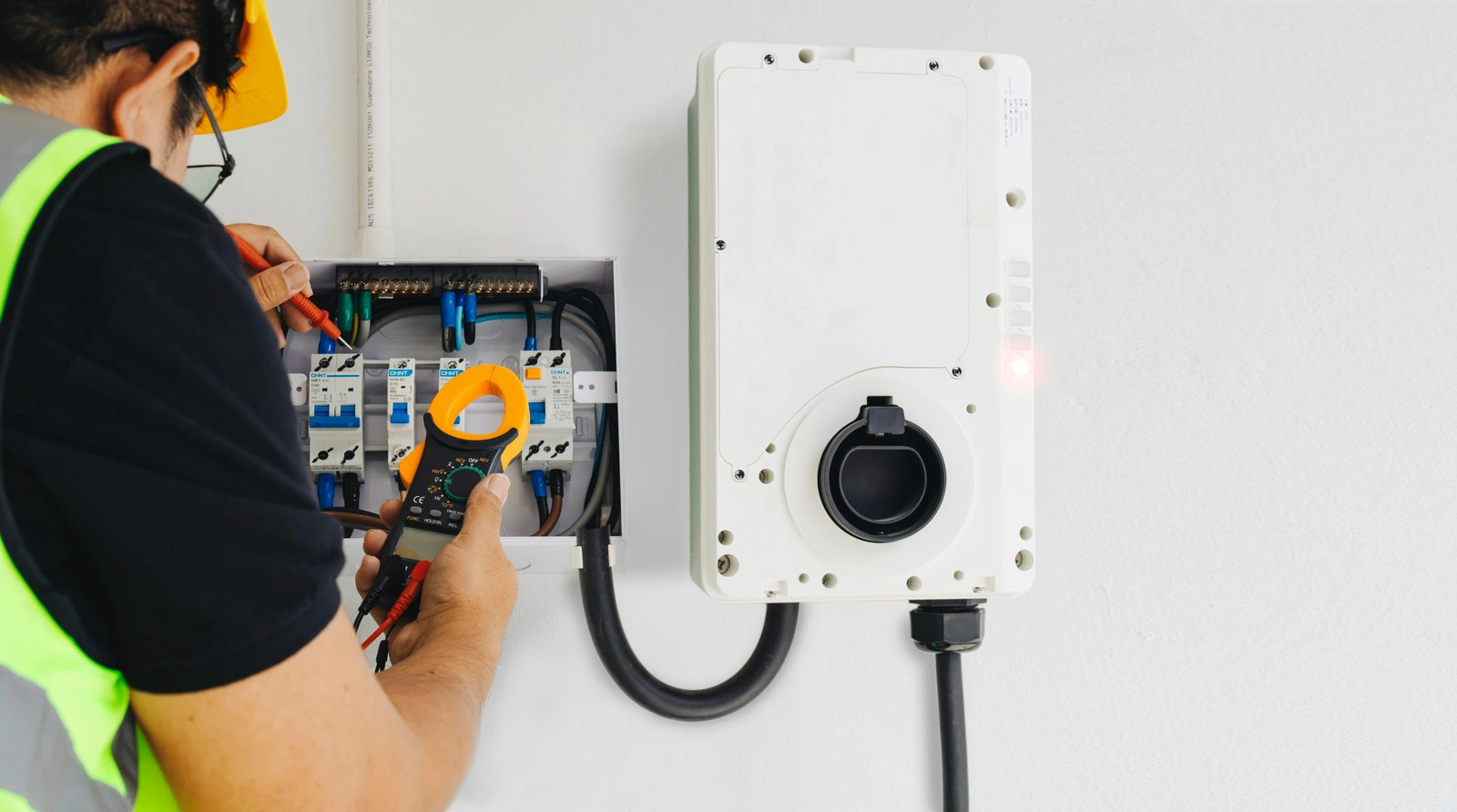
A Level 2 EV charger typically needs a dedicated 240-volt circuit rated between 40 and 60 amps, with the charger itself drawing 32 to 48 amps continuously. The exact amperage depends on the charger model and how fast you want to charge. Under the National Electrical Code, EV charging is treated as a continuous load, so the circuit breaker must be rated at 125% of the charger’s maximum draw — which is why a 40-amp charger requires a 50-amp breaker, not a 40-amp one.
Whether you’re upgrading a garage in Tewksbury or wiring a new build near Chelmsford, knowing your amperage needs before calling an electrician helps you budget accurately and avoid surprise panel upgrade costs.
Level 2 EV Charger Amperage, Breaker Size, and Charging Speed
Level 2 chargers run on a 240-volt circuit — the same voltage class as an electric dryer or range — instead of a standard 120-volt household outlet. The breaker size scales with the charger’s rated output:
- A 16-amp charger needs a 20-amp breaker and adds roughly 10–12 miles of range per hour of charging.
- A 32-amp charger needs a 40-amp breaker and adds roughly 20–25 miles of range per hour.
- A 40-amp charger needs a 50-amp breaker and adds roughly 25–30 miles of range per hour.
- A 48-amp charger needs a 60-amp breaker and adds roughly 30–37 miles of range per hour.
These figures are typical industry ranges — actual charging speed also depends on your vehicle’s onboard charger and battery size, so treat them as planning estimates rather than guarantees.
The 125% rule comes directly from the NEC’s treatment of continuous loads (a load that runs for three hours or more). Sizing the breaker with that extra headroom prevents the circuit from overheating during long overnight charging sessions.
Do You Need a Panel Upgrade for a Level 2 EV Charger?
It depends on how much spare capacity your panel already has. Many Massachusetts homes built before the 2000s have 100-amp or 150-amp panels, and adding a 40- to 60-amp EV charging circuit on top of an AC system, electric range, and other major appliances can push an older panel close to its limit.
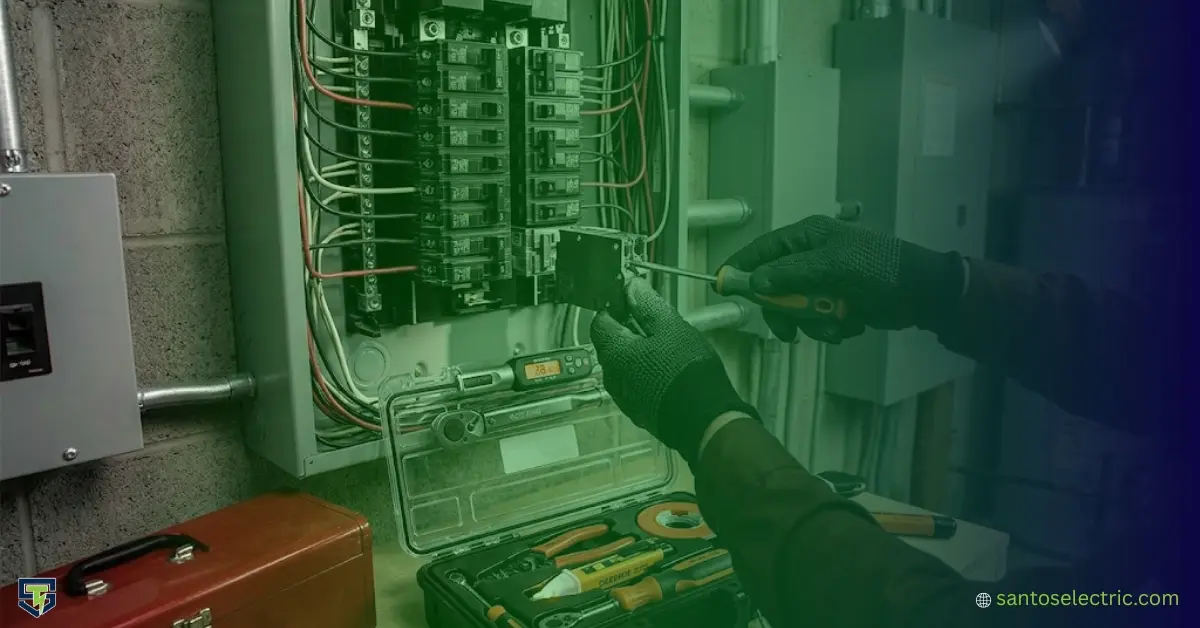
Before any installation, a licensed electrician should run a full electrical load calculation to confirm the panel can safely support the new circuit. If it can’t, a panel upgrade isn’t an optional upsell — it’s a code requirement to avoid overloading the home’s electrical system.
What EV Charger Installation Typically Costs in Massachusetts
Costs vary by home, panel condition, and local permitting, but homeowners can generally expect:
- Dedicated circuit only, panel has capacity: roughly $500–$1,200, covering wiring, the breaker, and a disconnect.
- Circuit plus a required panel upgrade: roughly $2,000–$4,000 or more, depending on panel size and permit fees.
- Charger unit (hardware): roughly $400–$800, separate from labor.
These are general planning ranges, not quotes — Middlesex County municipalities each handle EV charger permits slightly differently, so confirm local code and get a firm estimate from your electrician before budgeting a final number.
The EV Charger Installation Process, Step by Step
- Load calculation and panel assessment to confirm the existing panel can support the new circuit.
- Permit application, since most Massachusetts towns require an electrical permit for EV charger circuits.
- Circuit installation, running a dedicated 240-volt line from the panel to the charger location.
- Charger mounting and connection, wall-mounting the unit and wiring it to the new circuit.
- Inspection and testing, verifying the circuit trips correctly under load before it’s signed off.
Frequently Asked Questions
Can I install a Level 2 EV charger on my existing 100-amp panel?
Sometimes — it depends on how much of the panel’s capacity is already in use. A licensed electrician runs a load calculation to determine whether a 100-amp panel has enough headroom or whether a panel upgrade is needed first.
Do I need a permit for EV charger installation?
Yes, in nearly all Massachusetts municipalities. The electrician should handle the permit application and schedule the required inspection as part of the installation.
Is a 32-amp or 48-amp charger better for my home?
It depends on daily driving distance and how long the car sits plugged in overnight. A 48-amp charger fills a battery faster but draws more from the panel, which may push a panel upgrade sooner.
Can I plug a Level 2 charger into a regular outlet?
No. Level 2 chargers require a dedicated 240-volt circuit, not a standard household outlet. Running one on an underrated circuit is a serious fire risk.
How long does EV charger installation take?
Most installations where the panel already has capacity are completed in a single day. Projects requiring a panel upgrade can take longer, depending on permitting timelines.
Ready to Charge Safely at Home?
Getting your amperage right the first time avoids tripped breakers, failed inspections, and costly rework later. Timothy Santos Electric provides licensed EV charger installation throughout Tewksbury, Chelmsford, and the greater Middlesex County area — from load calculations to permit-ready wiring.
Looking for an electrician near me who specializes in EV charging? Our team also serves Chelmsford, MA, and surrounding towns with the same licensed, code-compliant approach.